


Introduction: Embracing Eclecticism in Your Home
In the ever-evolving world of interior design, sticking to a single, rigid style can feel restrictive. Today, homeowners are increasingly drawn to the beauty of eclecticism – the art of blending different design aesthetics to create a space that is uniquely yours. However, mixing decor styles without falling into a chaotic mess requires a thoughtful approach. This comprehensive guide will equip you with the knowledge and confidence to combine diverse styles in 2026, ensuring your home is both stylish and harmonious.
Understanding the Core Principles of Style Mixing
Before diving into specific combinations, it's crucial to grasp the fundamental principles that make style mixing work:
- Cohesion is Key: While you're mixing styles, the overall space must feel unified. This cohesion can be achieved through a common color palette, repeating textures, or a consistent flow of materials.
- Balance is Paramount: Avoid overwhelming a space with too many competing elements. Aim for a balance where one style might dominate slightly, while others act as complementary accents.
- Focus on a Focal Point: Every room needs a star. Whether it's a statement piece of furniture, a unique piece of art, or a striking architectural feature, a focal point helps anchor the eclectic design.
- Quality Over Quantity: Invest in well-chosen pieces that speak to each style you're incorporating. A few high-quality, impactful items will always be more effective than an abundance of mismatched clutter.
- Personalization is Everything: The most successful eclectic designs reflect the personality and history of the inhabitants. Don't be afraid to mix in personal treasures that add character and soul to your home.
Popular Style Combinations and How to Execute Them
Let's explore some popular and effective ways to mix decor styles:
1. Modern Bohemian (Boho-Modern)
This pairing brings together the clean lines and minimalist sensibility of modern design with the free-spirited, layered textures of bohemian style. The result is a warm, inviting, yet sophisticated space.
- Modern Elements: Opt for furniture with sleek silhouettes, neutral wall colors, and geometric patterns.
- Bohemian Accents: Introduce plush textiles like velvet and faux fur, natural materials like rattan and jute, global-inspired patterns (e.g., Moroccan, tribal), and an abundance of plants.
- Color Palette: A base of neutrals (white, grey, black) accented with earthy tones (terracotta, olive green, ochre) and pops of jewel tones (emerald, sapphire) works wonderfully.
- Key Pieces: A minimalist sofa paired with Kilim rugs, macrame wall hangings, and a collection of unique ceramics.
2. Industrial Farmhouse
This trend combines the raw, utilitarian feel of industrial design with the rustic charm and warmth of farmhouse aesthetics. It’s perfect for creating a cozy yet edgy living environment.
- Industrial Elements: Think exposed brick, metal accents (black iron, brushed steel), concrete finishes, and utilitarian lighting fixtures.
- Farmhouse Elements: Incorporate reclaimed wood, vintage furniture, shiplap walls, distressed finishes, and comfort-focused textiles like linen and cotton.
- Color Palette: A foundation of grays, blacks, and whites complemented by warm wood tones and muted blues or greens.
- Key Pieces: A rustic farm table with industrial metal chairs, a leather sofa paired with a barn wood accent wall, and exposed Edison bulb lighting.
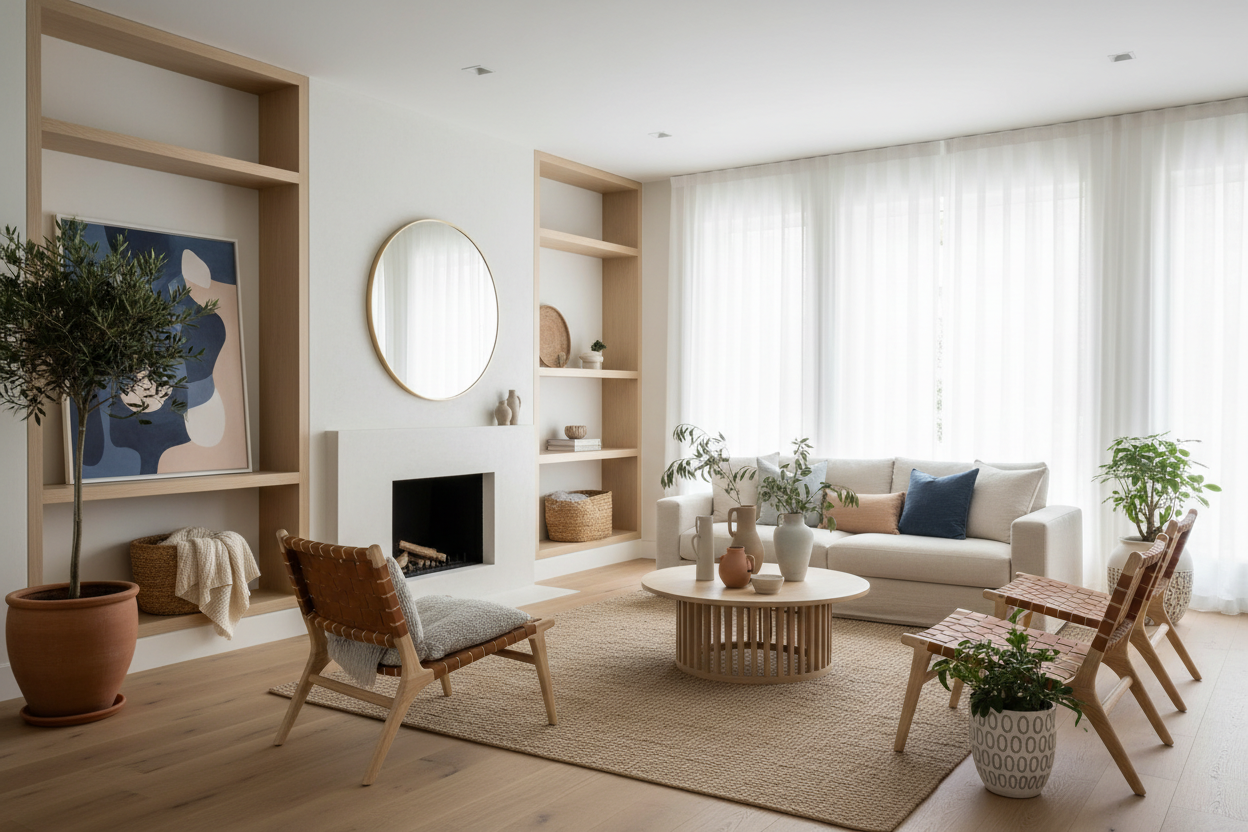
3. Scandinavian Mid-Century Modern
This fusion celebrates the clean, functional, and natural elements of both Scandinavian design and mid-century modern furniture. It’s about creating a serene, airy, and timeless space.
- Scandinavian Elements: Prioritize light wood tones (birch, ash), minimalist decor, functional furniture, and a bright, airy feel.
- Mid-Century Modern Elements: Look for iconic furniture shapes with tapered legs, organic curves, and a playful use of color in accents.
- Color Palette: Predominantly whites, grays, and light woods, with pops of muted blues, greens, or yellows.
- Key Pieces: A streamlined sofa with iconic mid-century legs, a simple wooden credenza, woven textiles, and abstract art.
4. Coastal Contemporary
This style offers a fresh, relaxed, and sophisticated take on coastal living, moving away from kitschy nautical themes towards a more refined and serene atmosphere.
- Coastal Elements: Natural materials like light woods, rattan, and linen; a color palette inspired by the sea and sand; and subtle oceanic motifs.
- Contemporary Elements: Clean lines, minimalist furniture, uncluttered spaces, and a focus on natural light.
- Color Palette: Soft blues, sandy beiges, crisp whites, and touches of driftwood gray.
- Key Pieces: A neutral-toned sofa with textured throws, reclaimed wood accent furniture, woven light fixtures, and artwork that evokes the sea without being overly literal.
Tips to Avoid Common Decorating Mistakes
Even with the best intentions, it's easy to make missteps when mixing styles. Here are some pitfalls to avoid:
- Too Much of a Good Thing: Resist the urge to cram every single element of each style into one room. Select the most impactful pieces that complement each other.
- Ignoring Scale and Proportion: Ensure that the furniture and decor items you choose are appropriately sized for your space. A giant ornate mirror might overwhelm a minimalist room, just as a tiny sculpture might get lost in a large, bohemian-inspired area.
- Inconsistent Color Palette: While you can mix styles, maintaining a consistent color scheme is crucial for visual harmony. Randomly throwing in colors from different palettes will lead to a jarring effect.
- Lack of Flow: Your rooms should transition smoothly from one to another. While each room can have its own personality, there should be a thread that connects them throughout your home.
- Over-Reliance on Trends: While trends can be inspiring, ensure that your core design choices are timeless. Mix trendy pieces with classic elements for a lasting appeal.
Conclusion: Creating a Personal Sanctuary
Mixing decor styles is not about creating a hodgepodge of items; it's about curating a collection that tells your story and makes your home a true reflection of your personality. By understanding the core principles, experimenting with thoughtful combinations, and avoiding common design pitfalls, you can confidently create a beautifully eclectic and harmonious living space in 2026 and beyond. Embrace the freedom to blend, curate, and personalize – your dream home awaits!

Leave a comment
This site is protected by hCaptcha and the hCaptcha Privacy Policy and Terms of Service apply.